
Wearability determines whether augmented reality (AR) glasses can move from occasional use to something people rely on throughout their daily lives.
We take a human-first approach, designing every element around how the device feels, fits, and functions for the person wearing it.
A wearability attribute is any physical or visual factor that influences comfort, safety, and ease of use when AR glasses are worn.
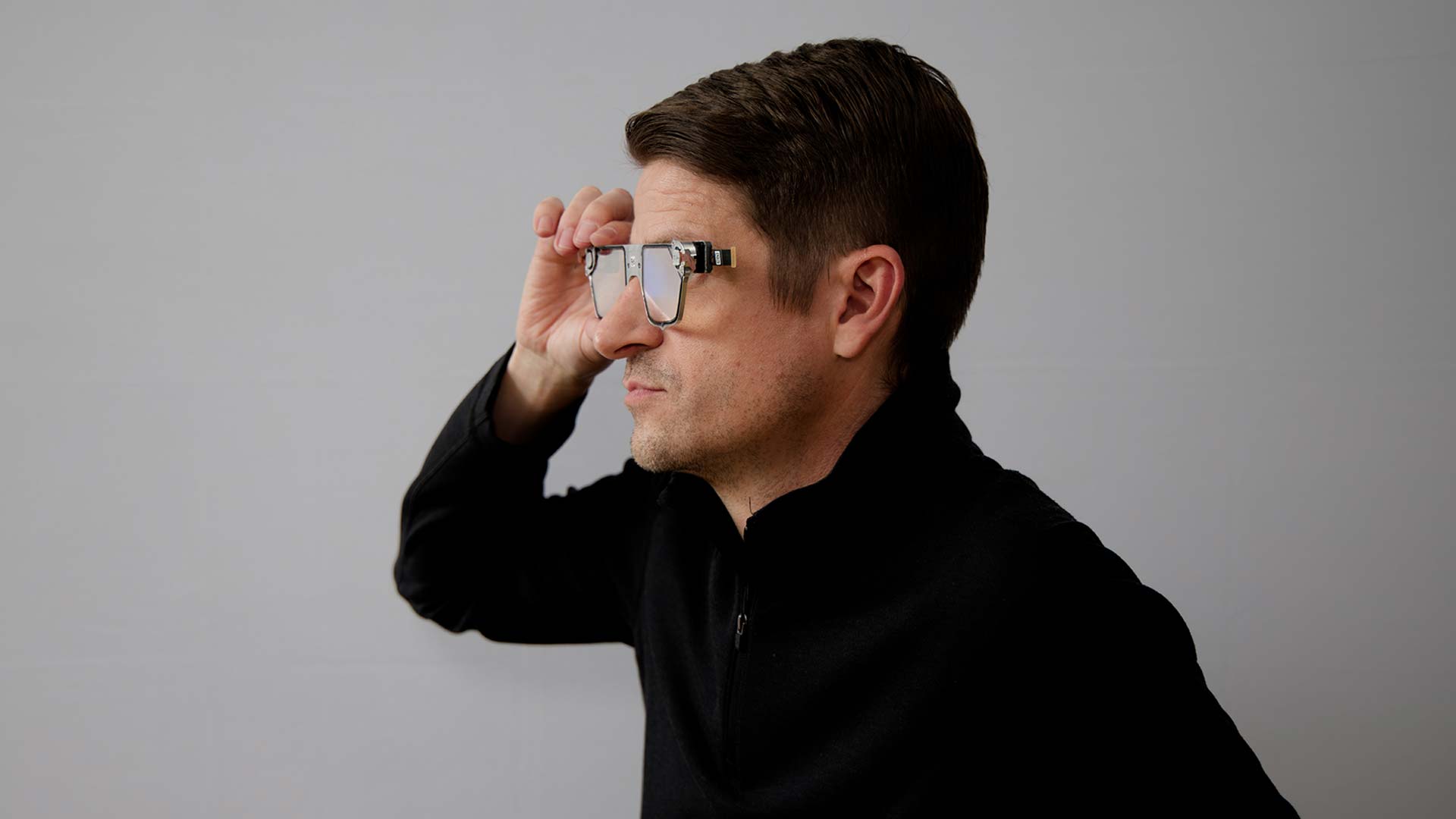
Weight / Mass
Weight in AR glasses is distributed across frames, waveguides, and internal components, all of which affect how a device rests on the face.
A lighter, well-balanced device improves comfort, reduces physical strain, and supports longer wearability.
Frames and Nose Pads
The frame structure of AR glasses defines how the device sits on the wearer’s face and sets the foundation for the overall fit. Nose pads help distribute weight across the frame, reducing pressure and improving overall comfort.
Proper design and weight distribution are essential for maintaining balance and preventing pressure points during long-term wear across a range of head and face shapes.
Waveguides
Positioned directly in front of the eyes, waveguides introduce mass at the front of AR glasses.
We carefully consider waveguide materials and design to avoid front-heavy imbalances and maintain visual and physical comfort.
Internal Components
Elements like projectors and lenses add mass within specific areas of the device.
Their placement plays a key role in preserving balance and preventing discomfort at key contact points, like the bridge of the nose.
-1920x1080-72dpi-v1-s1-adj-fin-wo-leg.jpg)
Heat / Thermal
Thermal output comes from active components, with higher concentrations in areas where electronics are densely packed and close to the skin.
We manage heat through system-level design, material selection, and thermal distribution strategies that reduce hot spots, move heat away from critical regions of the face, and maintain stable performance.
Circuitry
Electronic components generate heat during operation, which must be accounted for early in the design process.
Their placement and power demands must be carefully managed so excess heat moves away from sensitive areas and is dispersed efficiently.
Temple Arms
A significant portion of the device’s electronics is housed along the temple arms, making them a source of thermal output.
Because this region maintains consistent contact with the wearer, heat distribution and dissipation are critical for maintaining comfort and safety.
Projectors
Responsible for generating visual output, projectors are another component that contributes to the device’s overall thermal load.
We focus on balancing performance with efficiency to help maintain visual quality without introducing excess heat.
Digital Content Display
This area defines how virtual elements appear, align, and behave within the user’s field-of-view.
A well-designed visual experience is essential because even the most subtle issues can affect how much someone will want to wear the device and how long it feels comfortable to do so.
Vergence Accommodation
This phenomenon occurs when digital content appears at a different depth than where the eyes expect it, making it harder to focus. This often results in dizziness and headaches.
Presenting content at the correct depth helps reduce visual strain, making AR glasses use more comfortable.
Brightness
Content must remain visible across a wide range of lighting conditions, from the home to the office to a sunny park.
Achieving this balance improves usability across a variety of scenarios.
Content Clarity
The sharpness and definition of visual content affect how easily information can be interpreted.
High clarity reduces eye strain and allows the wearer to engage with content more comfortably.
Optical Registration
This refers to how consistently AR glasses sit relative to a wearer’s eyes and how accurately digital content appears in the intended location within their field-of-view.
We run human studies to evaluate and measure how people wear traditional eyewear, and use this data to build statistical models. These models inform our waveguide design so it can support a wide range of users, covering around 95% of expected fit positions.
Designing for Wearability
Wearability is the result of balancing weight, thermal performance, and visual experience into a cohesive AR glasses system that feels natural for extended periods.
Our expertise in these attributes, and our deep understanding of their interconnectedness in AR glasses, allows us to design waveguides that support both performance and comfort in the final device.