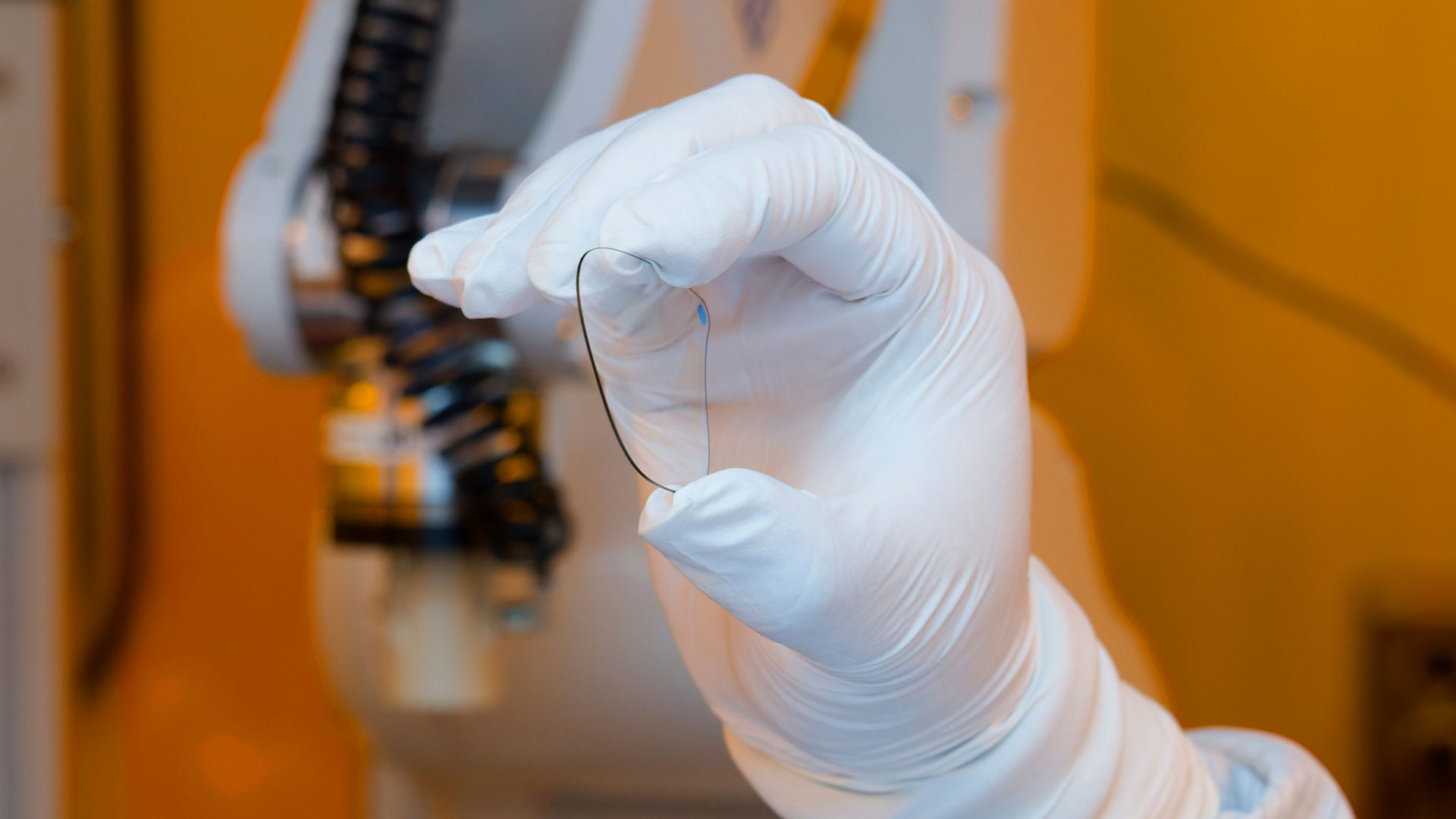
Building augmented reality (AR) glasses takes imagination, expertise, and precision.
It requires optics that can bend, reflect, and guide light with microscopic accuracy so digital content can be overlaid onto your physical environment. If that weren’t challenging enough, all of this must take place within a piece of glass or polymer, known as a waveguide, that's thin enough to resemble everyday eyewear.
Behind every high-performing waveguide lies a highly intricate manufacturing journey.
For this journey, most companies must rely on suppliers that may have up to forty different process steps, each introducing their own risks, costs, and time. Meanwhile, we’ve been refining our wafer-to-waveguide process for over a decade so our partners don’t have to. What once required forty steps, we can achieve in four.
Simplifying Complexity Through Expertise and Innovation

We help partners simplify the waveguide process by eliminating friction and complexity. One way we do this is through our proprietary Jet and Flash Imprint Lithography (J-FIL®). In this process, we create complex waveguide nanostructures in a single patterning step, while others use multiple steps for lithography and etching to accomplish the same task.
Our method is a huge advantage over others. By removing multiple error-prone steps, we can help our partners achieve a greater yield of high-performing waveguides faster.
And because we control this process, when our partners come to us with a vision (like a target field-of-view, specific waveguide thickness, or brightness requirement), we can refine and produce to their specs without the long, infamous feedback loops that waste time, money, and resources.
An Integrated Workflow That Scales
Progress in augmented reality depends on uniting research and development, design, and manufacturing. We are built for this collaboration.
Our cross-functional teams work together across every stage, sharing insights that move ideas quickly from the lab to the production floor.
As our researchers explore new materials and coatings, our optical designers translate those insights into lighter, thinner, and more efficient waveguides. Meanwhile, our manufacturing engineers refine processes to bring these discoveries to scale.
This highly integrated approach to AR optics allows for faster decision-making, greater design confidence, and reduced turnaround times.
Partners can directly benefit from our in-house material advancements, industry-leading designs, and manufacturing expertise.
Waveguide Production, Streamlined and Optimized
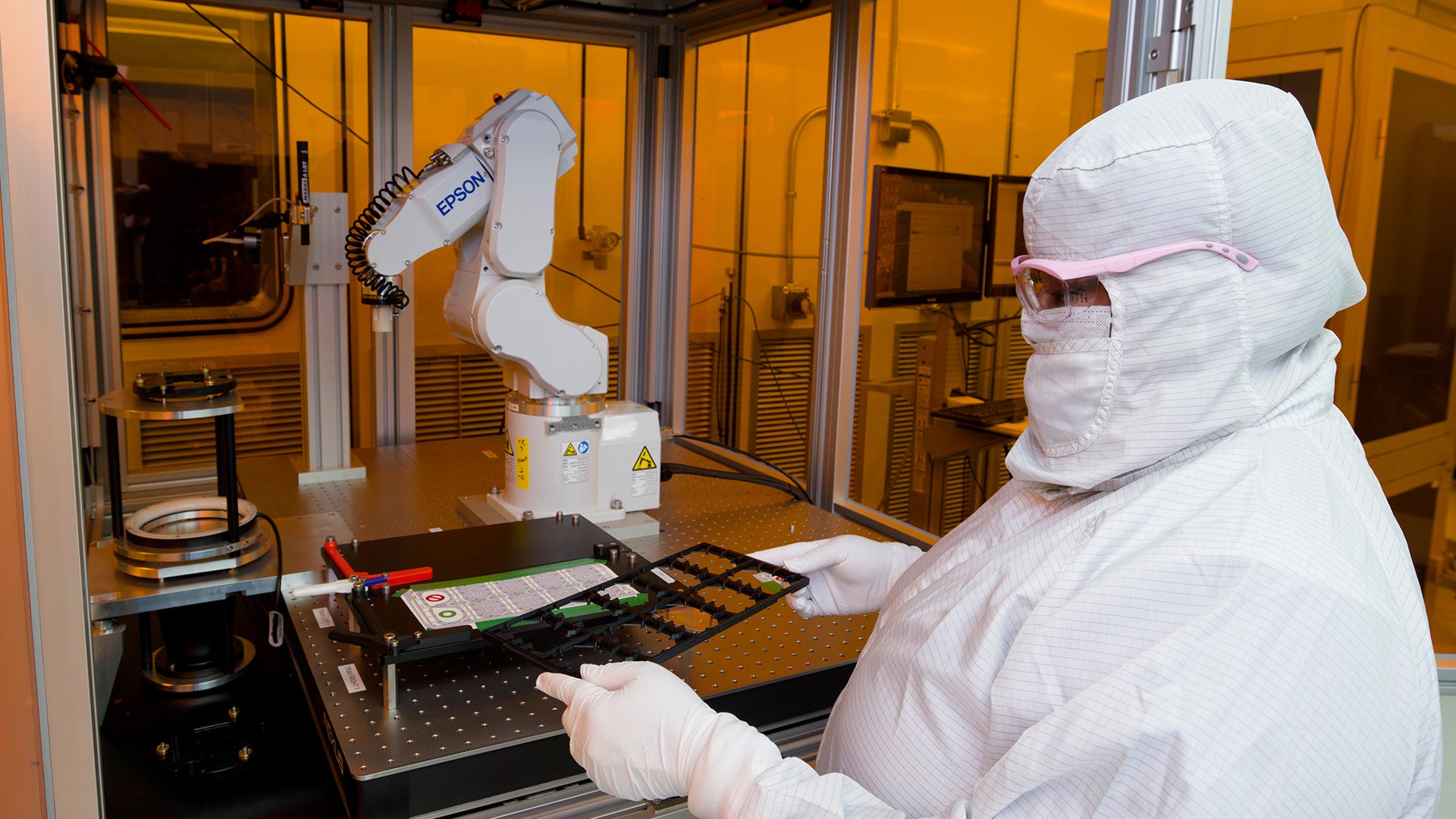
After more than a decade of focused innovation, we’ve turned the complex science of waveguide manufacturing into a streamlined process that is repeatable, predictable, and precise.
The waveguide is central to the optics stack, responsible for digital content and clarity. Its quality is crucial to the performance and viability of every pair of AR glasses.
Our multidisciplinary knowledge and experience across optics, materials, design, and manufacturing have refined the waveguide process to its most efficient form.
What this means for partners is shorter development cycles, more consistent yields at a lower cost, and a clearer path to production.
Learn more about our integrated waveguide manufacturing.